The Fitness Class Before the Studio Boom
The fitness class before the studio boom took shape in community halls, dance spaces and clubs, where shared routines and instruction organised group exercise.
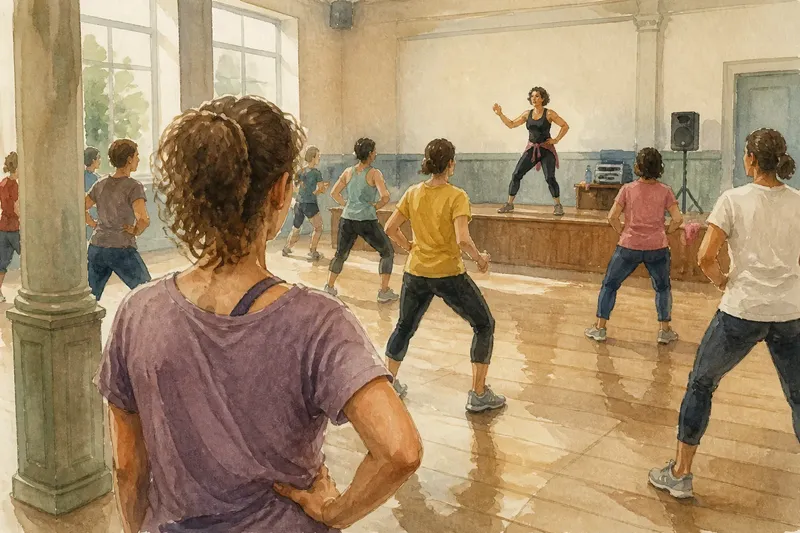
The common mistake is to imagine the fitness class before the studio boom as one established format, complete with a leader, music and a room copying along. That tidy image costs the history its variety: group exercise appeared in different settings, with different purposes and forms of instruction. A community dance session, a school exercise lesson and a club class are not interchangeable just because people moved together.
There is no single origin story here. Without a specific place, date or named programme, broad claims about how earlier classes worked are hard to pin down. It is more useful to look at the visible ingredients of a group session—demonstration, spoken cues, music and repetition—and ask how each could organise movement in a shared room.
Shared movement
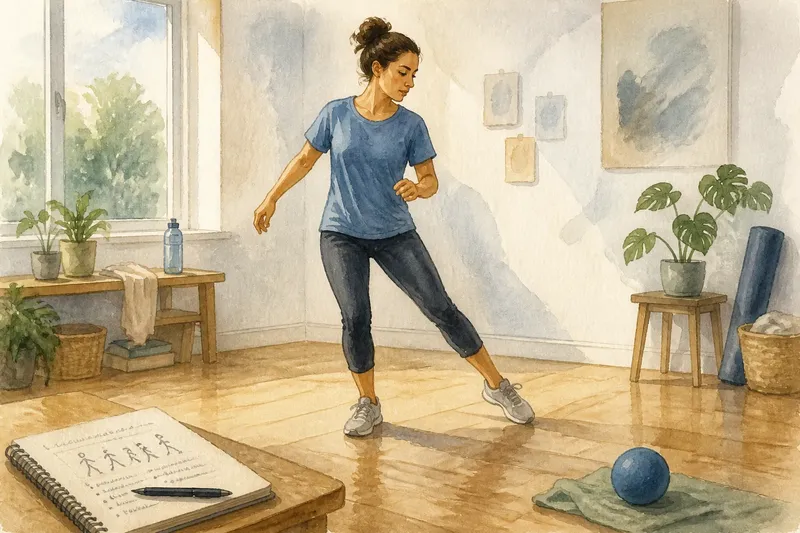
A group class needs some way for participants to know what to do and when. In a dance setting, a leader might demonstrate a sequence. In a lesson built around spoken instruction, the teacher could call out the next movement. A group might also follow a repeated pattern until it became familiar. These are descriptions of possible arrangements, not a claim that every earlier class used the same method.
Rooms mattered too. A school hall, community room or dance space gave people a place to gather, but the layout shaped what participants could see and hear. Someone standing behind a column would have a different view from someone near the front. The practical business of following a class has never been entirely abstract.
Music and rhythm
Music can supply a shared pulse and help mark changes in a sequence. In a dance-based session, the beat may guide the movement; elsewhere, music may simply sit beneath a teacher’s spoken cues. Its presence alone does not tell you which role it has.
Repetition can make a sequence easier to recognise. If a movement returns, participants have another chance to follow its shape. This is a straightforward feature of teaching a group, rather than evidence for a single historical path from older exercise formats to current classes.
It is not worth the effort to assign every present-day class a neat historical ancestor. Practices cross settings and change along the way. Without specific evidence, a tidy family tree says more about the desire for a tidy story than about the class itself.
Different kinds of instruction
Some group formats make demonstration central. Participants watch the leader and try to follow the movement. Others rely more on spoken direction, with a teacher naming an action or signalling a change. A class can combine both, and music may either lead the movement or provide background.
These distinctions describe how a class communicates, not a ranking of formats. Demonstration can be hard to see from the back of a crowded room. Spoken instruction can be hard to hear if music or room noise competes with it. The arrangement of the room and the way a teacher gives cues affect what participants can follow.
Questions about history?
Was there one first fitness class?
There is no single class that can stand for all communal exercise. Group movement took place in different settings, and a claim about a specific beginning needs a named place, date or programme.
Did older classes always use music?
That cannot be assumed across every setting or period. Music can organise movement, but spoken direction and demonstration can also guide a group.
Why did classes repeat movements?
Repeating a sequence gives participants another opportunity to recognise and follow it. That practical observation does not establish that repetition defined every older format.
Were earlier classes like current studio sessions?
Some may share visible features, such as a leader and a group moving together, but that resemblance does not make the formats identical. Their settings, aims and methods of instruction could differ.
A room in practice
Imagine a community hall where a teacher demonstrates a short sequence, calls out changes and uses a musical track beneath the instruction. A new participant stands near the back, cannot see one arm movement clearly and misses a spoken cue over the music. They step to a clearer sightline, follow the foot pattern and watch for the next demonstration. The observable result is a simpler version of the same group sequence, without needing to claim that the whole class moves identically.
That small scene illustrates the difference between a class’s ingredients and its history. A leader, music, a shared task and repeated movement can describe how a session works. They do not, by themselves, establish when the format began or how widely it was used.
What the format shows
The fitness class before the studio boom is best approached as a broad subject, not a single style with a settled origin. Shared exercise could involve a teacher, music, spoken cues and repeated sequences in varying combinations. Each feature helps explain how people might take part together; none alone supplies a complete history.
When you encounter a claim about an earlier class, look for its setting, date and named example. If those details are absent, treat the account as a general description rather than a documented history. That modest distinction leaves room for what is known without asking a simple picture to do the work of evidence.