A Movement Break Between Screen Tasks
A movement break between screen tasks can interrupt a desk-bound spell without adding a new task. Choose a comfortable action and attach it to a clear cue.
The common mistake with a movement break between screen tasks is making it ambitious enough to need its own preparation. A mat, a change of clothes and a full routine can turn a useful pause into another task to postpone. The cost is simple: you stay in the same position because the alternative feels like a project.
A movement break between screen tasks works best as a small change of posture that fits between pieces of desk work. It need not be strenuous, polished or performed away from your desk. Choose an action that feels comfortable and is easy to repeat.
Choose a clear cue
Start with a boundary already present in your working day. Finishing a call, sending a document for review or closing one task before opening another makes a more dependable cue than a vague intention to move more. Choose one boundary you encounter regularly, rather than assigning a break to every notification.
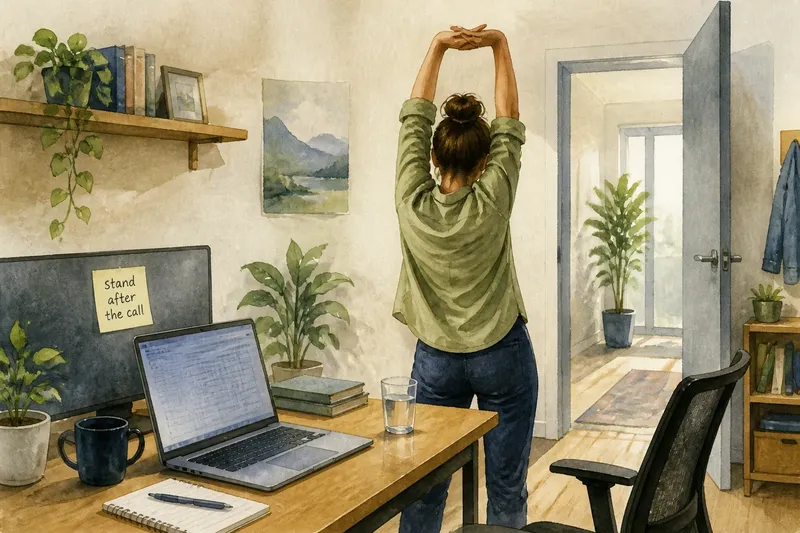
Make the cue visible where the work happens. A note beside the monitor might say “stand after the call”; a calendar reminder can prompt a pause at a natural transition. If reminders become background noise, remove them and use the task boundary instead. A cue should help you notice an opportunity, not make the day feel supervised.
Consider what follows the cue. If the next task requires you to sit straight back down, choose a movement that does not demand a long detour. If you are about to refill a glass or collect a printed page, let that ordinary errand provide a change of posture. The break is allowed to be modest: its job is to interrupt the seated spell, not become another appointment.
Pick a comfortable action
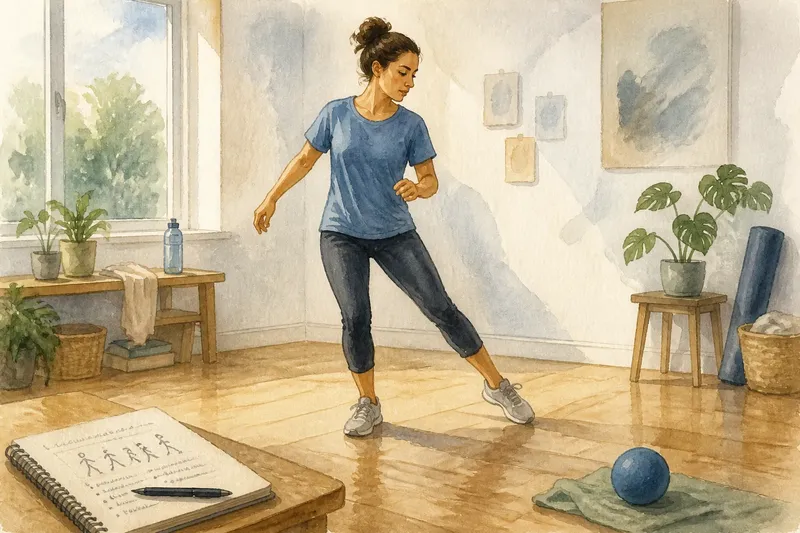
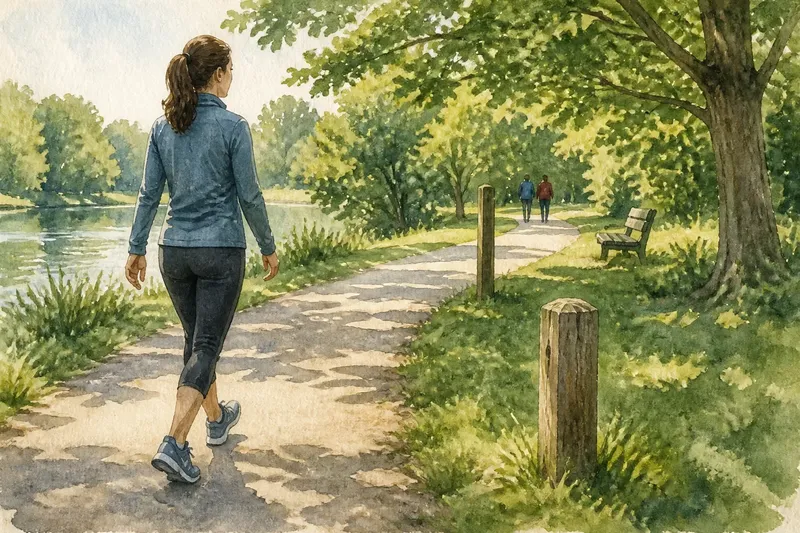
Choose an action that feels ordinary in your workspace and does not require special equipment. You might stand and reach your arms comfortably overhead, walk to the doorway and back, roll your shoulders gently, or shift your weight from one foot to the other while standing. You could also sit upright, place both feet on the floor and move your ankles through a comfortable range.
These are options, not a prescribed circuit. Pick one or two that suit the space, clothing and energy you have at that moment. A narrow home office may favour a standing reach; a shared workplace may call for a quiet walk to the water station. There is no prize for choosing the movement that looks most athletic.
Let comfort set the boundary. Keep the movement unforced and stop if it causes pain, dizziness or unusual discomfort. If a health condition, injury or mobility concern affects what feels appropriate, ask a qualified health professional for individual guidance rather than trying to solve it with a desk routine.
Keep the transition easy
Make the first version simple enough to do without setting a timer or clearing the room. Stand, take a few relaxed steps, then return when you are ready. Or remain beside the chair and move your shoulders and arms gently before sitting again. The point is a clear change from the previous posture, not an arbitrary duration.
Say you finish a video call at a small desk in a shared room and need to open a spreadsheet next. Closing the call window is your cue. You stand beside the chair, walk to the doorway and back, then sit down to begin the spreadsheet. The observable result is that you have changed position before starting the next task. If the route feels awkward or disrupts someone else, replace it with a comfortable standing reach in the same space.
Keep the sequence uncomplicated: finish the task, make the chosen movement, then begin the next one. Avoid adding a phone check, a scroll through messages or a search for a better routine in the middle. Those actions can occupy the pause without changing your posture. Returning to work is part of the plan, not evidence that the break was too brief.
Make repetition ordinary
Repeatability depends more on fitting the break to the day than on finding the ideal movement. Leave the route clear if walking to the doorway suits you. Keep a glass of water where you can refill it on the way back, if useful. In a shared office, choose a route that does not cross someone else’s calls or turn a quiet movement into a performance.
Use a small menu rather than inventing a routine each time: a short walk, a comfortable standing reach, or gentle seated ankle and shoulder movement. Choose according to the room and how you feel. If one option repeatedly feels inconvenient, drop it. A menu is there to remove decisions, not preserve a collection of obligations.
Some days will have fewer natural pauses than others. A meeting-heavy schedule may leave little room to stand between calls, while focused work may offer an obvious stopping point. Take a comfortable opportunity when one appears; do not turn a missed cue into a debt to repay later. The break is a habit to make available, not a scorecard.
What should the break feel like?
Do I need exercise clothes?
No. For a brief change of posture, ordinary work clothes are usually enough if they allow comfortable movement. Choose an action that suits what you are wearing rather than changing clothes for a more elaborate routine.
Should I use a timer?
Only if a reminder helps you notice a natural pause. A task boundary, such as finishing a call or sending a draft, may be less intrusive than an alarm that interrupts a thought.
What if I cannot leave my desk?
Choose a movement that works beside or in the chair, such as standing briefly if comfortable, moving your ankles or changing how you sit. If standing is not suitable, a comfortable seated change of position is another option.
How often should I take one?
There is no single schedule that suits every working day. Start with a transition already in your routine, see whether the pause fits without disrupting your tasks, then adjust the cue if needed.
Skip the extra ceremony
It is not worth buying a special timer, collecting a catalogue of desk stretches or tracking every time you stand. Those additions can make a small pause feel like a training plan with paperwork. A clear cue and a comfortable action are enough to begin.
When a movement break between screen tasks feels easy to repeat, keep that version rather than continually upgrading it. If the cue stops working, attach the pause to a different task boundary; if the movement becomes inconvenient, choose another comfortable option. The useful habit is the interruption itself: a deliberate change of position before the next screen task takes over.